Is that majestic oak in your yard becoming a potential threat? For homeowners in Jackson, MS, understanding the early signs of a hazardous tree isn’t just about tree care; it’s about protecting your property and family. With our unique climate and soil conditions, subtle clues can indicate a tree is losing its structural integrity, often before it becomes an emergency.
Key Takeaways
- Jackson’s expansive clay soils and frequent storms increase the risk of tree instability and root rot.
- Look for specific local signs: fungal growth at the base, sawdust (frass), V-shaped crotches, and sudden leaning.
- Early detection and professional assessment can prevent costly damage and ensure safety.
- Local regulations mean no permit is usually needed for residential tree removal, but check for historic districts or protected species.
- Always hire fully insured professionals to avoid liability for accidents.
What Makes a Tree Hazardous in Jackson?
A hazardous tree is one with structural defects that make it likely to fail, posing a risk to people or property. In Jackson, MS, the combination of expansive clay soils and frequent high-wind events means that even seemingly healthy trees can become unstable quickly. Identifying these issues early is crucial for safety and proactive management.
Top Warning Signs of a Hazardous Tree in Jackson MS
Fungal Growth and Root Rot
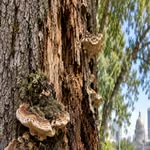
Fungal growth, such as mushrooms or conks, at the base of a tree, especially in Jackson’s consistently wet clay soils, often signals root rot. This means the tree’s primary anchor system is compromised, severely reducing its stability.
Insect Infestations (Borers)
Tiny piles of sawdust, known as “frass,” around the base or on the bark indicate active insect infestations. Pests like the Emerald Ash Borer and Southern Pine Beetle are present in Mississippi and can quickly hollow out a tree’s structural integrity, making it brittle and prone to breakage.
Structural Defects: V-Crotches and Cracks
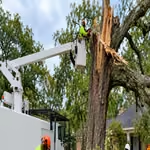
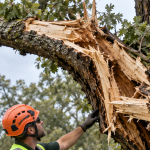
Deep “V” splits where major branches meet the trunk are inherently weak points. These V-shaped crotches are highly susceptible to “cleaving” or splitting during the sudden squalls and high winds common in Central Mississippi. Look for cracks extending into the trunk or along major limbs.
Sudden Leaning and Instability
Any new or sudden lean, particularly after heavy rainfall, is a critical red flag. Jackson’s expansive clay soils become saturated and lose their ability to support large trees, leading to instability. A leaning tree might indicate root system failure and is at high risk of falling.
Deadwood and Canopy Loss
Branches that are dead, brittle, or lack leaves, especially those overhanging structures or high-traffic areas, are immediate hazards. Significant canopy loss or sparse foliage can also indicate underlying health issues, stress, or root problems.
Why Act Quickly? The Risks of Neglecting a Hazardous Tree
Neglecting a hazardous tree on your property carries significant risks that extend beyond just aesthetic concerns. Ignoring these warning signs can lead to severe consequences, both financially and personally.
- Property Damage: Falling branches or entire trees can crush vehicles, damage roofs, fences, and outbuildings, leading to expensive repairs.
- Personal Injury: A failing tree poses a direct threat to anyone in its vicinity, potentially causing serious injuries or fatalities.
- Increased Liability: As a property owner in Mississippi, you could be held liable for damages or injuries if a hazardous tree falls from your property onto a neighbor’s land or a public space. Ensuring your tree service has proper Workers’ Comp and General Liability insurance is vital.
- Higher Removal Costs: Emergency removals after a tree has fallen are typically far more expensive and complex than planned, proactive removals.
- Utility Disruptions: Falling trees can sever power lines, leading to outages for you and your neighbors, and creating additional hazards with live wires.
Local Factors Increasing Tree Hazard in Jackson, MS
Jackson’s specific environmental conditions and local regulations play a significant role in tree health and hazard assessment. Understanding these factors helps homeowners make informed decisions.
Expansive Clay Soils
Central Mississippi’s distinctive “expansive” clay soils are a double-edged sword. They retain water excessively during wet seasons, which can lead to root rot. During droughts, these same soils shrink, destabilizing root systems and making large trees prone to leaning or uprooting unexpectedly.
Frequent Storms and High Winds
Jackson frequently experiences “sudden squalls” and high-wind events. Trees that haven’t been properly pruned to allow wind to pass through (a process called crown thinning) are at a much higher risk of breaking or falling during these seasonal storms.
Common Pests and Diseases
Local pests and diseases are constant threats. The Emerald Ash Borer (EAB), recently confirmed in Mississippi, poses a severe risk to Ash trees. The Southern Pine Beetle is the region’s most destructive pest, often targeting stressed pines. Additionally, Annosus Root Rot is a common fungal disease in local pine populations, leading to “windthrow” where trees uproot in moderate winds. The Mississippi Forestry Commission tracks these threats closely. Learn more about forest health from the Mississippi Forestry Commission.
Navigating Local Tree Removal Regulations
While generally no permit is required for residential tree removal on private property in Jackson, there are crucial exceptions. If your tree is located in a Historic District (like Belhaven or Fondren) or is a protected species, you’ll need a Certificate of Appropriateness (COA). The City of Jackson Urban Forestry Division oversees these applications. Always confirm local regulations before undertaking any major tree work.
Assessing the Hazard: When to Call a Professional
When you spot potential hazard signs, deciding whether to handle it yourself or call a professional is a critical step. While minor pruning might be DIY-friendly, anything indicating a structural risk demands expert attention.
| Factor | DIY Assessment | Professional Assessment |
| Tree Size | Small, easily accessible branches | Any tree larger than 15-20 feet, especially near structures |
| Hazard Type | Minor deadwood on low branches | Leaning, major cracks, root issues, and significant deadwood in the canopy |
| Equipment Needs | Hand pruners, small ladder | Chainsaws, ropes, harnesses, cranes, stump grinders |
| Safety Risk | Low risk, ground-level work | High risk (working at height, near power lines, heavy lifting) |
| Insurance/Liability | Homeowner’s insurance may cover some damage, but not injuries from DIY work | Fully insured (Workers’ Comp, General Liability) protects you from legal exposure |
| Expertise Required | Basic gardening knowledge | Arborist certification, knowledge of tree biology, local pests, and safety protocols |
What a Professional Tree Service Provides
When a tree becomes hazardous, you need reliable, expert help. Professional intervention ensures that risks are managed with the right equipment and technical knowledge of tree biology.
Comprehensive Tree Risk Assessment
Certified arborists conduct thorough assessments, meticulously checking for the specific signs of hazard common in Jackson, from root rot in clay soils to borer infestations. They identify the precise risks and provide clear, actionable recommendations to ensure safety and protect your property.
Safe and Efficient Hazard Mitigation
Whether it’s strategic pruning, cabling, bracing, or complete removal, professional teams employ state-of-the-art equipment and techniques. They prioritize safety for both the crew and your property, ensuring efficient hazard mitigation with minimal disruption.
Addressing Common Customer Concerns
Reputable services address common homeowner frustrations directly by committing to: clear communication, prompt responses, meticulous property protection (using ground mats to prevent lawn damage), thorough cleanup, and full insurance coverage (Workers’ Comp and General Liability) for your peace of mind.
Cost of Hazard Tree Removal in Jackson
The cost for hazardous tree removal in Jackson varies significantly based on several factors. Emergency services, for instance, typically cost more than planned removals.
- Small Trees (under 25 feet): Generally $200 – $700. These are often smaller ornamental trees or young trees that are accessible.
- Medium Trees (25-50 feet): Typically $500 – $1,500. This range covers most residential trees that require professional equipment, but not necessarily a crane.
- Large Trees (over 50 feet): Can range from $1,000 to over $2,500. Large, mature trees, especially those near structures, power lines, or with extensive decay, will fall into this category.
- Emergency Removals: Expect an additional 25-50% on top of standard rates. These urgent situations often require immediate dispatch and specialized equipment.
- Stump Grinding: Usually an additional $100-$300, depending on stump size.
- Accessibility: Trees in tight spaces or those requiring crane access will cost more due to increased complexity and equipment needs.
Preventive Measures for Tree Health
Proactive measures can significantly reduce the likelihood of your trees becoming hazardous. Regular care and attention are key to maintaining healthy, resilient trees.
- Regular Pruning: Schedule routine pruning to remove dead or weak branches, improve tree structure, and allow wind to pass through the canopy more easily.
- Proper Watering: Ensure trees receive adequate water, especially during dry spells, to prevent stress. However, avoid overwatering in clay soils, which can promote root rot.
- Soil Management: Improve drainage in heavy clay soils by amending with organic matter. Proper soil health supports a strong root system.
- Pest and Disease Monitoring: Learn to recognize early signs of common Jackson pests and diseases. Early intervention can save an infected tree.
- Annual Professional Check-ups: Consider an annual inspection by an ISA-certified arborist to identify potential issues before they escalate. This is an investment in your property’s safety and value.
Frequently Asked Questions
Do I need a permit to remove a hazardous tree in Jackson, MS?
Generally, no permit is required for tree removal on private residential property in Jackson, MS. However, exceptions apply if the tree is in a Historic District (like Belhaven or Fondren) or is a protected species. Always check with the City of Jackson Urban Forestry Division for specific requirements.
How much does hazardous tree removal cost in Jackson?
The cost of hazardous tree removal in Jackson varies widely, typically ranging from $500 to over $2,500. Factors like tree size, location, hazard level, and necessary equipment (e.g., crane access) significantly influence the final price. Emergency removals often incur higher costs.
Can I be held liable if my hazardous tree falls and causes damage or injury?
Yes, Mississippi law can hold property owners liable for injuries that occur on their land, including those caused by falling trees or branches. This is why hiring a tree service with proper Workers’ Comp and General Liability insurance is essential to protect yourself from potential lawsuits.
When should I call a professional for a hazardous tree assessment?
You should call a professional arborist if you notice any significant signs of hazard, such as sudden leaning, large dead branches, extensive fungal growth at the base, deep cracks in the trunk, or sawdust indicating active borers. Early assessment can prevent major damage.
What can I do to prevent my trees from becoming hazardous?
Regular pruning, proper watering (especially during droughts), soil amendments to improve drainage in clay soils, and proactive pest/disease treatments can help maintain tree health. An annual professional inspection can also identify issues before they become critical.
What are the most common tree pests and diseases in Jackson?
The Emerald Ash Borer and Southern Pine Beetle are major threats in Jackson. Annosus Root Rot is also common in pines, causing trees to uproot easily. Knowing these local pests helps homeowners recognize early signs of infestation and seek timely treatment.
Protect Your Home by Addressing Hazardous Trees Early
Identifying hazardous tree signs early is your best defense against potential property damage, personal injury, and costly emergency removals. In Jackson, factors like expansive clay soils, frequent storms, and specific pests make regular tree assessment crucial. Don’t wait for a storm to reveal a hidden danger. If you suspect a tree on your property is becoming hazardous, reach out to a trusted local expert. Heritage Tree Services offers comprehensive tree risk assessments and safe, efficient solutions to protect your home and family. Your peace of mind is worth the call.