Key Takeaways
- Live Oaks are often considered significant or protected trees under Jackson’s local ordinances.
- Permit requirements typically depend on tree size, condition, and location.
- Hazardous or storm-damaged trees may qualify for exemption but usually require documentation.
- Removing a protected tree without approval can result in fines or mitigation requirements.
Live Oaks are one of the most iconic trees in Jackson, Mississippi. Their wide, arching branches and dense canopy provide shade from the intense summer sun and contribute to the character of established neighborhoods. These trees are also valuable assets, improving air quality, reducing stormwater runoff, and increasing property value.
Because of their importance, Live Oaks are often subject to local tree protection regulations. Many homeowners assume that trees on private property can be removed freely, but that is not always the case. Depending on the tree’s size, location, and condition, you may need a permit before removing a Live Oak in Jackson. Understanding these requirements before scheduling removal can prevent costly mistakes and legal complications.
Why Live Oaks Are Often Protected
Municipal tree ordinances are designed to preserve urban canopy cover and protect significant trees that provide environmental and community benefits. Live Oaks, known for their longevity and structural strength, are considered cornerstone species in Mississippi landscapes.
Jackson’s urban forestry policies generally aim to balance private property rights with public interest. Mature canopy trees contribute to neighborhood cooling, storm resilience, and aesthetic continuity. Because of this, larger trees, especially native trees like Live Oak, often fall under special protection once they reach a certain size.
When a Permit Is Typically Required
In many cases, a permit is required if a Live Oak exceeds a specific diameter. Cities commonly use diameter at breast height (DBH) as the measurement standard, taken 4.5 feet above ground level. If the tree meets or exceeds the protected size threshold established by local ordinance, removal usually requires approval.
Location also plays a significant role. If the Live Oak is growing within the public right-of-way, such as the strip between the sidewalk and the curb, it is generally under city jurisdiction. Even if you maintain the area, the tree may legally be considered public infrastructure. Removing it without authorization could result in penalties.
Permits are also often required when tree removal is associated with construction or land development. If building plans involve excavation, driveway expansion, grading, or foundation work within the tree’s root zone, the city may require review and approval. In some cases, a tree protection plan must be submitted before work begins.
Situations That May Qualify for Exemption
There are circumstances where a permit may not be required, but documentation is usually necessary to confirm eligibility.
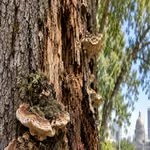
If a certified arborist determines that a Live Oak is dead, structurally unsound, or poses an imminent safety hazard, removal may proceed under a hazard exemption. However, written verification is typically required to protect both the homeowner and the municipality from liability concerns.
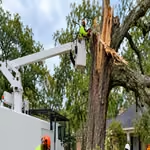
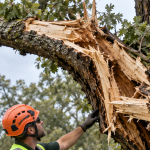
Storm damage can also create emergencies. If a Live Oak has partially failed and threatens life or property, immediate removal may be permitted. Even so, homeowners are often expected to notify the city afterward and provide evidence of the hazardous condition.
Smaller Live Oaks that fall below the protected size threshold may also be exempt. Because ordinances can change, verifying current requirements with the appropriate city department is always recommended.
How the Permit Process Works
If a permit is required, the process generally begins by contacting the relevant municipal office. In Jackson, tree removal permitting is commonly handled through planning, public works, or urban forestry departments.
You may need to provide the tree’s location, species, diameter measurement, reason for removal, and photographs. For construction-related removals, site plans or surveys may also be requested. In some cases, an arborist report is necessary to evaluate tree health or risk level.
After submission, the city reviews the application to ensure compliance with local regulations. Approval may include specific conditions, such as requiring a replacement tree, contributing to a mitigation fund, or protecting adjacent trees during work.
Processing times vary depending on workload and project complexity, so homeowners should plan accordingly.
Potential Consequences of Non-Compliance
Removing a protected Live Oak without obtaining a required permit can lead to significant consequences. Municipal penalties often scale according to the tree’s size, meaning larger trees result in higher fines. Some cities calculate penalties based on trunk diameter, making mature canopy trees particularly costly to remove illegally.
In addition to fines, property owners may be required to plant replacement trees or halt construction until the issue is resolved. Stop-work orders can delay renovation or development projects, creating financial and scheduling challenges.
Beyond legal penalties, unauthorized removal can negatively impact property value and neighborhood character. Mature Live Oaks are not easily replaced, and their absence can alter the landscape for decades.
Considering Alternatives Before Removal
Before deciding to remove a Live Oak, it is worth exploring alternatives. Many issues that prompt removal, such as overhanging limbs, minor root intrusion, or concerns about storm safety, can often be addressed through professional pruning or risk mitigation.
A certified arborist can assess structural integrity, recommend corrective pruning, or install support systems if needed. In some cases, thoughtful landscape adjustments can resolve conflicts without sacrificing a mature tree.
If removal is ultimately approved and necessary, selecting and planting an appropriate replacement species helps preserve canopy coverage and long-term property value.
Heritage Tree Services specializes in safe and compliant tree removal in Jackson, including Live Oaks protected under city ordinances. Their certified arborists can assess tree health, determine hazard risks, and handle the permit process, ensuring any removal meets local regulations. From hazardous branches to full tree removal, Heritage Tree Services provides homeowners with expert, legal, and efficient solutions while preserving the integrity of Jackson’s urban canopy.
Frequently Asked Questions
1. Is a permit always required to remove a Live Oak in Jackson?
Not always, but mature or publicly located trees typically require approval. Size and location are the primary determining factors.
2. How do I measure my Live Oak for permit purposes?
Measure the trunk diameter at 4.5 feet above ground level. This measurement, called DBH, is the standard used in most municipal codes.
3. What if the tree is leaning after a storm?
Leaning may indicate structural instability, but documentation from a certified arborist is usually required before removal without a permit.
4. Can I remove a Live Oak during home renovations?
Possibly, but construction-related removals generally require review and may include replacement conditions.
5. Who should I contact for accurate information?
The appropriate department within the City of Jackson, Mississippi, can provide the most up-to-date regulations and application procedures.
Conclusion
Removing a Live Oak in Jackson is not simply a matter of personal preference. These trees are valued components of the city’s urban forest, and many are protected once they reach a certain size or occupy public areas. Permit requirements typically depend on diameter, location, and tree health.
Before scheduling tree removal, homeowners should confirm local regulations, consult a qualified arborist when needed, and follow the proper application process. Taking these steps ensures compliance, avoids unnecessary penalties, and helps preserve Jackson’s distinctive tree canopy for future generations.