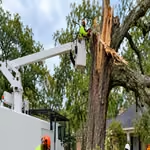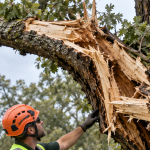
When a severe storm hits Jackson, MS, fallen trees can cause costly damage to roofs, fences, garages, and driveways. Many homeowners are left wondering whether their home insurance covers tree removal and repairs. The truth is, coverage depends on where the tree fell, what it damaged, and the specifics of your policy. In most cases, insurance helps when the fallen tree damages a covered structure or blocks access to your property. However, if it only lands in your yard without causing harm, removal costs are usually out-of-pocket. Understanding these details helps you make faster, smarter recovery decisions after a storm.
Jackson’s mix of mature oaks, pines, and magnolias makes storm-related tree damage a common issue, especially during spring thunderstorms and hurricane seasons.
Understanding Tree Damage and Homeowners Insurance in Jackson, MS
Most standard homeowners’ insurance policies include coverage for storm-related tree damage caused by wind, lightning, hail, or ice. However, that doesn’t necessarily mean every fallen tree qualifies. Generally, insurers will only pay for tree removal and repair costs if the tree caused damage to a covered structure like your house, garage, shed, or fence.
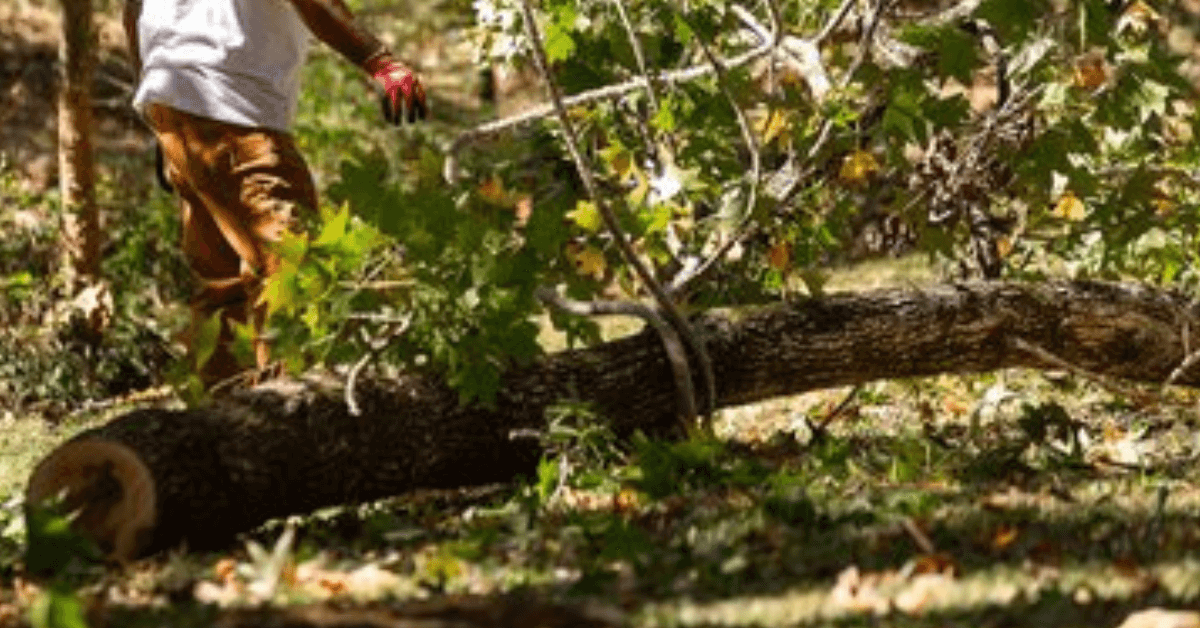
If the fallen tree didn’t damage anything, for example, if it simply fell across your yard, then cleanup and removal may fall under the homeowner’s responsibility. It’s important to read your policy’s fine print and speak directly with your insurance agent after a storm.
When Tree Removal Is Covered by Home Insurance
1. The Tree Damaged Your Home or Structures
If a powerful storm uproots a tree and it lands on your roof, fence, or shed, most insurance policies will cover both the structural repairs and the cost of removing the tree debris. Coverage limits usually depend on your individual policy, but insurers often cap tree removal coverage at a certain percentage of your total property coverage.
2. The Tree Blocked Access to Your Property
If a fallen tree blocks your driveway, front entrance, or garage, your insurance may offer partial reimbursement for removal, even if there was no structural damage. The rationale is that blocked access can impede safety and daily living, qualifying for limited cleanup assistance.
3. The Tree Fell from a Neighbor’s Property
When a neighbor’s tree falls onto your home or fence during a storm, your insurance company typically manages the claim. You wouldn’t file with your neighbor’s insurance unless negligence is proven, for instance, if the neighbor ignored visible signs of decay or refused to remove a dangerous tree after being notified.
When Tree Removal Is Not Covered by Insurance
Insurance generally won’t cover removal in cases where:
- The tree fell but did not damage a covered structure.
- The fall resulted from neglect, pest infestation, or disease rather than a natural disaster.
- The tree was already dead or unstable before the storm and wasn’t properly maintained.
In those situations, homeowners are responsible for both the removal costs and potential secondary damage prevention.
Real-Life Example: How Documentation Can Protect Your Claim
If a lightning strike splits a healthy oak and sends it through your roof, you’re likely covered. But if a rotted pine collapses during mild winds, the insurer may classify it as a maintenance issue and deny the claim.
How to File a Tree Damage Insurance Claim
Step 1: Document the Damage Thoroughly
Take multiple high-resolution photos and videos from various angles showing the fallen tree, affected areas, and nearby structures. Record the date and approximate time of the incident. If possible, include weather service documentation confirming storm conditions.
Step 2: Contact Your Insurance Company
Notify your insurer promptly. Many companies have a 24-hour claims hotline for storm emergencies. Provide the documentation you collected, along with any initial cleanup receipts.
Step 3: Get a Professional Tree Assessment
Call a licensed and insured company like Heritage Tree Services. Our qualified arborists can assess the damage, provide detailed written assessments, and identify safety hazards that might not be immediately visible. This information helps speed up claim approval and ensures the insurance company has accurate repair data.
Step 4: Avoid DIY Removal
Attempting to remove storm-damaged trees without the proper equipment can be dangerous. Hidden electrical lines, heavy limbs, and unstable roots pose serious risks. Professional crews have cranes, saws, and safety gear designed for these complex removals.
The Importance of Professional Tree Removal After Storms
Storm cleanup isn’t just about improving your property’s appearance; it’s about restoring safety and preventing secondary damage. A fallen or leaning tree can compromise structures, block emergency access, or even cause additional collapses if not handled correctly.
At Heritage Tree Services, we use specialized machinery, including our new hydraulic lift, along with protective rigging systems and industry-approved methods to remove hazardous trees efficiently. Our crews are trained to identify structural weaknesses and prevent further property damage during removal.
Emergency Tree Removal Services
After major weather events, our emergency response team operates 24/7 throughout Jackson, Clinton, Flora, and nearby areas. We coordinate directly with insurance adjusters to ensure fast claim processing, detailed documentation, and transparent billing so you can focus on recovery while we handle the heavy lifting.
How to Prevent Storm Damage in the Future
- Schedule annual inspections with a qualified arborist to spot weak or leaning trees early.
- Trim back heavy limbs extending over your home, driveway, or utility lines.
- Remove dead or infested trees before peak storm seasons.
- Consider cabling and bracing systems for large or heritage trees to stabilize the canopy.
- Improve soil drainage to prevent root instability during heavy rain.
Being proactive about tree maintenance is one of the best ways to avoid costly insurance claims and protect your home year-round.
Storm Damage Insurance Coverage: Quick Reference Chart
| Scenario | Covered by Insurance? | Handled By |
|---|---|---|
| A tree fell on your home or roof | Yes | Home insurance |
| The tree blocked your driveway | Partial coverage | Home insurance |
| The tree fell in the yard only | No | Homeowner |
| The neighbor’s tree fell on your home | Yes | Your insurer (then your neighbor’s) |
| A dead or diseased tree fell | No | Homeowner |
| The tree damaged your car | Not under the home policy | Auto insurance |
Frequently Asked Questions About Storm-Damaged Trees and Insurance
Does homeowners insurance cover tree removal after a storm?
Yes, if the fallen tree caused damage to a covered structure such as your home, garage, or fence. If it only landed in your yard without causing harm, cleanup may not be included under standard coverage.
What if a neighbor’s tree fell on my property?
In most cases, your insurance company will manage the claim. However, if your neighbor’s negligence directly contributed, for example, by ignoring a clearly dead or hazardous tree, you may be able to recover damages through their insurance.
How much does storm tree removal cost in Jackson, MS?
Prices depend on the tree’s size, accessibility, and the complexity of removal. Heritage Tree Services offers free on-site assessments, competitive rates, and assistance with insurance coordination to reduce out-of-pocket expenses.
Should I remove a storm-damaged tree myself?
No. Damaged trees are unpredictable and dangerous to handle without professional training. Attempting removal could lead to injury or property damage. Always rely on an insured tree service.
Can I prevent trees from falling during storms?
While it’s impossible to eliminate all risk, regular pruning, inspections, and preventive care dramatically reduce the likelihood of tree failure during severe weather.
Request Help With Storm-Damaged Trees
Heritage Tree Services provides 24/7 emergency response, professional cleanup, and full insurance coordination across Jackson, Clinton, Flora, and the surrounding Central Mississippi areas. Our licensed and insured arborists handle everything from hazardous removals to preventive maintenance.