Key Takeaways
- A large trunk crack is one of the clearest signs of serious structural weakness in a tree and should never be ignored.
- Not every crack means immediate removal, but the size, depth, location, and cause of the crack all affect the risk level.
- Cracks near branch unions or extending into the root flare are especially dangerous, since they affect the tree’s main support points.
- Cabling and bracing can sometimes stabilize a cracked tree, but only when the rest of the tree is otherwise healthy and the crack is caught early.
- A professional risk assessment is the safest way to determine whether a cracked tree can stay or needs to come down.
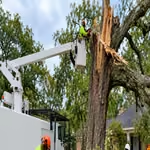
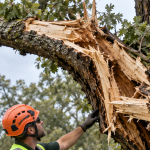
A crack running down the trunk of a large tree is one of those things that’s hard to unsee once you notice it. It’s also one of the more serious warning signs a tree can show, because the trunk is what holds up everything above it: the canopy, the major limbs, and all the weight that comes with wind, rain, and ice. For homeowners in the Greater Jackson Area wondering whether a cracked trunk means their tree is done for, the honest answer is: it depends, but it’s rarely something to wait on.
What Causes a Tree Trunk to Crack
Trunk cracks develop for a handful of common reasons, and understanding the cause can help explain how serious the crack actually is.
- Storm and wind stress: High winds put enormous lateral force on a trunk, and a tree with a heavy, unbalanced, or previously weakened canopy is more likely to split under that pressure.
- Frost cracks: Rapid temperature swings, particularly sharp freezes after a warm day, can cause the outer wood to contract faster than the inner wood, splitting the bark and outer trunk layers.
- Included bark at branch unions: When two large limbs grow too closely together, bark can become trapped between them instead of forming a strong wood-to-wood connection, creating a natural weak point that eventually cracks under stress.
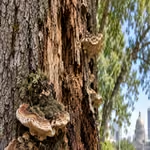
- Decay from old wounds: A trunk wound that was never properly addressed can develop internal decay, weakening the wood from the inside until it eventually cracks under normal stress.
- Lightning strikes: A direct or near-direct lightning strike can cause an explosive crack along the trunk as sap and moisture rapidly vaporize.
Why Trunk Cracks Are a Bigger Deal Than Branch Damage
A broken branch affects a relatively small, isolated part of a tree. A trunk crack affects the tree’s entire structural system. Every branch, every leaf, and the full weight of the canopy all rely on the trunk to stay upright, so damage here has a ripple effect that damage elsewhere doesn’t. A cracked trunk is also more exposed to future problems: rain and moisture can enter the crack and accelerate decay, insects can use it as an entry point, and each additional wind event has the potential to widen the crack further.
Factors That Determine Whether the Tree Can Be Saved
Some of the factors that determine whether the tree can be saved are as follows –
Size and Depth of the Crack
A shallow, narrow crack limited to the outer bark is far less concerning than a wide crack that extends deep into the heartwood. Deeper cracks compromise more of the trunk’s structural integrity and are more likely to keep growing under future stress.
Location on the Trunk
Cracks near the base of the tree affect the entire structure above them and are generally more serious than cracks higher up. Cracks that extend into the root flare or root collar are particularly concerning, since they can indicate the crack is connected to root system instability.
Whether the Crack Runs Through a Branch Union
A crack that runs through or near a major branch union, especially one with included bark, is more likely to be part of an ongoing structural failure rather than an isolated wound. These situations often carry a higher risk of sudden, complete failure.
Overall Tree Health
A tree that’s otherwise vigorous, with a full canopy and no other signs of decline, has a better chance of compartmentalizing a crack and continuing to grow safely, especially with support. A tree that’s already stressed, in decline, or showing other signs of disease is far less likely to recover from added trunk damage.
Tree Location and Target Risk
Even a moderately concerning crack becomes a higher priority when the tree stands near a home, driveway, patio, or area where people regularly walk or park. A professional arborist in Clinton, Mississippi refers to this as “target risk,” and it plays a major role in whether a cautious wait-and-monitor approach is reasonable or whether removal needs to happen sooner rather than later.
Can a Cracked Tree Be Saved With Cabling or Bracing?
In some cases, yes. Tree support systems, cables installed high in the canopy and rods bolted through the trunk at the crack site, can help redistribute stress and reduce the chance of the crack widening or the tree failing outright. This approach works best when:
- The crack is caught early, before it has significantly compromised the trunk
- The rest of the tree is structurally sound and shows no other major defects
- The tree has enough value, whether for shade, screening, or sentimental reasons, to justify ongoing monitoring and maintenance.
Cabling and bracing isn’t a permanent fix, and a professionally installed system still requires periodic inspection to make sure it’s holding up as intended. It buys time and reduces risk; it doesn’t undo the underlying damage.
When Removal Is the Right Call
Some cracks are severe enough that removal is the only responsible option. This is generally true when:
- The crack extends more than a third of the way around the trunk’s circumference
- The crack runs deep into the heartwood or connects with visible decay
- The tree is already leaning or showing signs of root instability in addition to the crack.
- The crack is on a large, mature tree positioned where a failure would strike a structure or high-traffic area.
- The tree shows multiple compounding issues, such as a cracked trunk plus significant deadwood or disease.
What to Do If You Notice a Large Crack
The safest first step is to keep the area around the tree clear, avoid parking or spending time directly beneath it, and arrange for a professional evaluation as soon as possible. Trying to assess crack severity from the ground alone is difficult even for experienced homeowners, since depth and internal condition aren’t always visible from the outside.
Heritage Tree Services provides professional tree inspections and removal services across the Greater Jackson Area. Our arborists assess trunk cracks, structural stability, tree health, and surrounding property risks. When preservation is possible, we can recommend cabling, bracing, or ongoing monitoring. When removal is necessary, our experienced crew uses careful techniques to safely manage hazardous trees.
With more than 11 years of experience, we help homeowners make informed decisions about damaged trees. We proudly serve Clinton, Jackson, Brandon, Madison, Pearl, Ridgeland, Vicksburg, and surrounding communities. Call Heritage Tree Services for a professional assessment if you notice a large or worsening trunk crack.
Frequently Asked Questions About Cracked Tree Trunks in Clinton, Mississippi
Is every crack in a tree trunk dangerous?
Not necessarily. Small, shallow cracks limited to the outer bark are often less serious, but larger or deeper cracks, especially near the base or a branch union, carry real structural risk and deserve a professional look.
Can a tree survive a lightning strike that cracked the trunk?
Sometimes, particularly if the strike caused a narrow crack rather than widespread bark loss. Recovery depends heavily on how much of the trunk’s circumference was affected and how healthy the tree was beforehand.
How much does it cost to cable a cracked tree versus removing it?
Cabling and bracing is generally less expensive than full removal in the short term, but it comes with ongoing inspection needs. A full comparison depends on the tree’s size, location, and the extent of the crack, which is best discussed during an on-site assessment.
Will a crack in a tree trunk heal on its own?
Trees can partially compartmentalize a wound by growing new wood around its edges, but a true crack, especially a deep one, doesn’t heal back together the way a cut in skin does. The compromised area typically remains a permanent weak point.
How urgent is it to deal with a cracked tree near my house?
It should be treated as a priority. A tree with a significant trunk crack positioned near a home carries a real risk of limb or whole-tree failure during the next major storm, so scheduling an inspection promptly is strongly recommended.
Summary Checklist: Cracked Tree Trunk Decision Guide
| Situation | What to Check | What to Do |
| Shallow crack in outer bark only | Depth and whether it’s actively widening | Monitor and reassess after the next storm season |
| Deep crack extending into heartwood | Circumference affected and location on trunk | Get a professional structural assessment promptly |
| Crack near a branch union | Presence of included bark | Treat as higher risk; consider cabling or removal |
| Crack plus a new or worsening lean | Root flare and soil condition at the base | Treat as a potential emergency and act quickly |
| Otherwise healthy tree with an isolated crack | Overall canopy health and vigor | Discuss cabling or bracing as a possible option |
Final Advice
A large crack in a tree trunk is a signal, not a verdict. Some cracked trees can be stabilized and kept safely for years with the right support system, while others have already crossed into hazard territory and need to come down before the next storm makes the decision for you. The difference comes down to details that are best evaluated in person by someone trained to weigh them.
If you’ve noticed a crack in one of your trees, don’t wait to find out which category it falls into. Heritage Tree Services is ready to take a look and give you a straightforward answer.
Reviewed by a Licensed Arborist
This article has been reviewed by a licensed arborist to ensure the guidance on trunk cracks, structural risk, and tree support systems reflects current arboriculture standards.