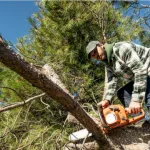
The 5-15-90 Rule is a professional tree-felling safety guideline that explains when and where most serious accidents occur. It states that 90 percent of severe tree-felling incidents happen within the first 15 seconds of a tree beginning to fall and within 5 feet of the trunk. For arborists working in Greater Jackson, this rule highlights why escape routes, timing, and distance are critical during high-risk tree removal.
Key Takeaways
- The 5-15-90 Rule highlights that most falling accidents happen in the first 15 seconds and within 5 feet of the tree’s base.
- Properly planned and cleared escape routes are non-negotiable for professional tree felling safety.
- Hiring licensed and insured arborists who understand and apply the 5-15-90 Rule helps protect workers, property, and the public.
- Understanding this rule helps homeowners appreciate the complexity, skill, and risks involved in expert tree removal.

Understanding the “5-15-90 Rule”: A Professional’s Perspective
The 5-15-90 Rule isn’t a government regulation but a piece of hard-won industry wisdom, often discussed in professional training and safety briefings. It’s a powerful way to communicate the most dangerous phase of tree felling. This rule emphasizes that once a tree starts moving, the situation can escalate rapidly, leaving little room for error or hesitation. It’s not just about where the tree lands, but what happens immediately around the base.
Why the First 15 Seconds Are Critical
When a tree begins its fall, it accelerates quickly. The first 15 seconds are chaotic and unpredictable, as the tree might twist, kick back, or splinter in unexpected ways. This initial phase is when the forces involved are most dynamic, and the tree’s trajectory can still be influenced by internal stresses or unforeseen breaks. Professionals must react instantly and follow their pre-planned escape.
The Importance of the 5-Foot Zone
The area within 5 feet of the tree’s base is where the stump might ‘kick back’ or where the base of the falling trunk could pivot violently. This zone is also where the feller is typically positioned to make the final cut. Vacating this immediate high-hazard area is crucial. The rule is a constant reminder to always have a clear, safe escape path ready and to use it without delay.
Beyond the Rule: Building a Safe Felling Plan
Knowing the 5-15-90 Rule isn’t enough; professionals integrate it into every felling plan. This means meticulous preparation long before the chainsaw even touches the tree. It starts with a comprehensive assessment of the tree, its surroundings, and potential hazards. Then, a precise plan is formulated to control the fall and ensure everyone’s safety.
Establishing Your Escape Route
One of the most common mistakes during tree felling is underestimating how quickly a compromised tree can fall, especially when internal rot or structural damage is present. Trees with decay often behave unpredictably and may twist or shift outside the planned drop zone. To reduce risk, professional arborists establish clear escape routes before any cut is made. These routes are typically positioned at approximately a 45-degree angle away from the intended fall direction, cleared of obstacles, and verified for stable footing. A properly planned escape path is critical during the first seconds of a tree’s descent, when most serious injuries occur.
Pre-Felling Hazard Assessment
Before any tree felling, we conduct a thorough hazard assessment. This includes evaluating the tree’s lean, rot, dead branches, and any nearby structures or power lines. We also consider wind direction, ground conditions, and the presence of any other workers or bystanders. This assessment helps us determine the safest felling direction and the necessary cuts, all while keeping the 5-15-90 rule in mind for the moment of fall.
Local Requirements and Professional Standards in Greater Jackson
For homeowners in Greater Jackson, understanding professional standards isn’t just about quality work; it’s about safety and liability. In Mississippi, individuals advertising tree surgeons and performing tasks like tree removal must hold a Tree Surgery License (TSL) issued by the Mississippi Department of Agriculture and Commerce (MDAC) Bureau of Plant Industry. This isn’t just a piece of paper; it signifies a baseline level of knowledge and compliance. Additionally, we often refer to guidelines from the Mississippi Forestry Commission for best practices in tree care and protection.
Why Licensing and Insurance Matter
One common thing we see in the field is homeowners being approached by ‘tree guys’ who offer incredibly low prices. In Greater Jackson, we’ve seen folks get burned when these uninsured, unlicensed crews damage property or leave a job unfinished. They often cut corners on safety, too, because they don’t know or don’t follow rules like 5-15-90. Always ask for proof of a Mississippi Tree Surgery License and insurance. It’s not just about compliance; it’s about your peace of mind and protection. A reputable company like Heritage Tree Services will always provide these credentials upfront.
Tree Removal Safety FAQs in Greater Jackson
What exactly does the 5-15-90 Rule mean for my tree removal project?
The 5-15-90 Rule means that 90% of serious tree felling incidents happen within the first 15 seconds of the tree starting to fall and within 5 feet of its base. For your project, it means professional arborists will meticulously plan escape routes and clear the immediate area, highlighting the critical danger during that initial fall to protect both workers and your property.
Do I need a permit to remove a tree in Jackson, MS?
Permit requirements for tree removal vary by municipality within Greater Jackson. You’ll often need a permit if the tree is of a certain size, located in a conservation area, or part of a protected species list. It’s always best to check with your local city or county planning department before any removal. A professional tree service like Heritage Tree Services can often help you navigate these local regulations.
How can I verify a tree service company is licensed and insured in Mississippi?
In Mississippi, individuals performing ‘tree surgery’ (which includes removal) on ornamental trees and shrubs need a Tree Surgery License (TSL) from the Mississippi Department of Agriculture and Commerce (MDAC) Bureau of Plant Industry. Always ask to see their TSL and proof of insurance. Reputable companies will be happy to provide these documents, ensuring they’re qualified and you’re protected.
What are the biggest risks of trying to fell a tree myself?
Trying to fell a tree yourself, especially a large one, comes with huge risks. Without proper training, equipment, and an understanding of rules like 5-15-90, you risk severe injury, fatality, or extensive property damage. Trees can fall unpredictably, ‘kick back,’ or strike power lines. Professionals have the experience, gear, and safety protocols to mitigate these dangers.
How do professionals plan an escape route during tree felling?
Professionals plan an escape route by first assessing the tree’s lean, the direction of fall, and surrounding obstacles. They then clear a path (typically 45 degrees away from the planned fall direction) that allows them to quickly move to safety once the tree begins to fall. This route is checked for clear footing and any potential hang-ups, ensuring a quick and safe exit from the high-hazard zone.
Protecting Your Property: Common Tree Problems We Solve
Homeowners in Greater Jackson often encounter various tree-related issues that demand professional attention. These aren’t just aesthetic concerns; they’re often safety hazards that require the careful, rules-driven approach of experts who understand the dangers highlighted by the 5-15-90 rule.
Safety Is the Foundation of Professional Tree Removal
Understanding the 5-15-90 Rule helps homeowners appreciate the immense focus on safety that goes into professional tree felling. It’s a stark reminder that tree removal is not a task for the inexperienced or ill-equipped. In Greater Jackson, Heritage Tree Services prioritizes the safety of our crew, your property, and the public by rigorously applying industry-best practices and rules. When you’re facing a challenging tree removal, remember that expertise, proper planning, and unwavering commitment to safety are non-negotiable.